Overview
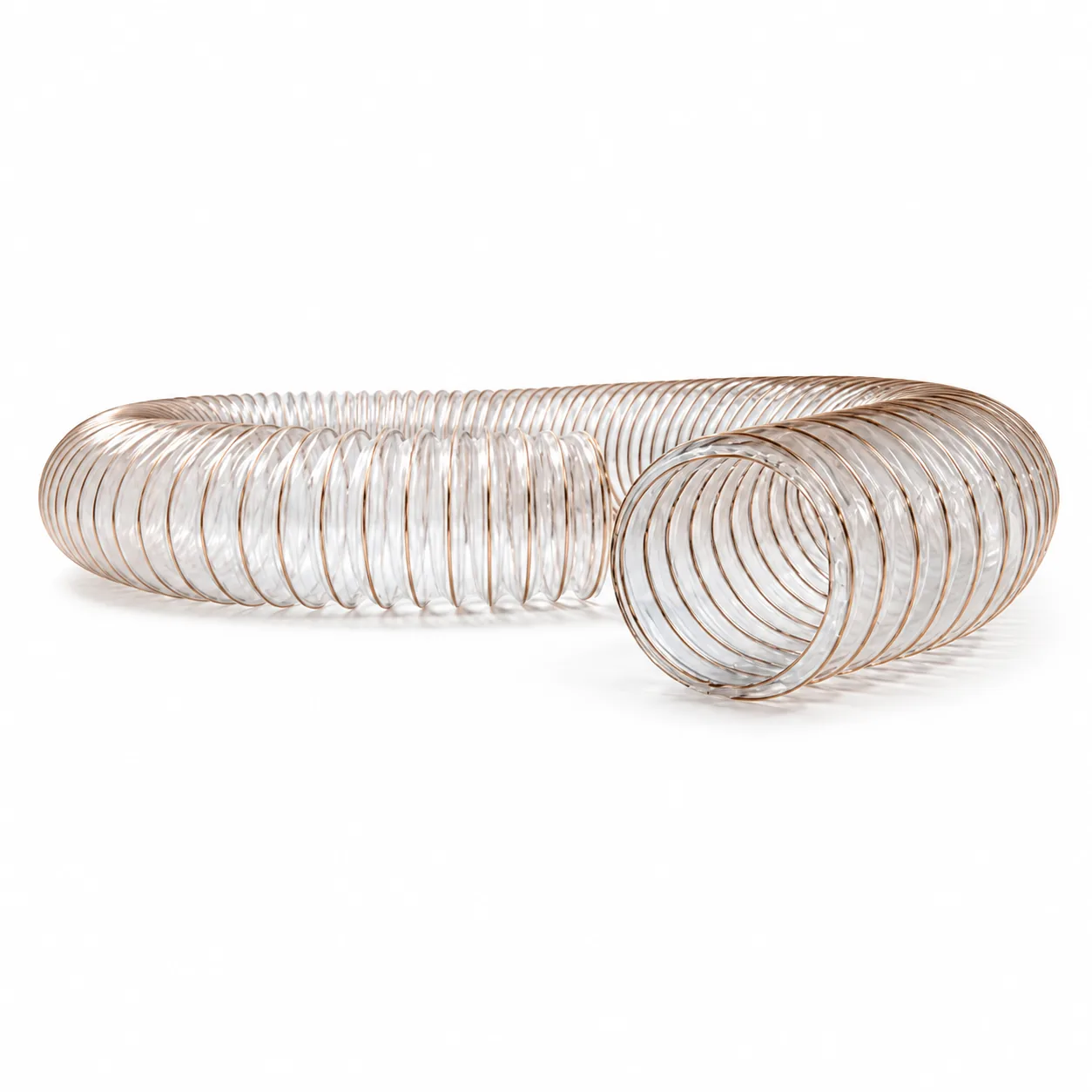
Light, flexible, and stable under negative pressure: PU Steel Wire Duct Hose moves dust, woodworking chips, and factory particulate from extraction point to collector without kinking, collapsing, or adding unnecessary weight to mobile equipment rigs.
Applications
Dust extraction, woodworking equipment, factory suction, ventilation, light material handling, and mobile ducting after abrasion and vacuum conditions are confirmed.
Specification Review Pathway
Capture pressure or vacuum, temperature, media, movement, bend radius, environment, and duty cycle before selecting a hose family.
Review tube or liner material, reinforcement, helix, cover, coupling system, and fitting compatibility against the product application.
Use datasheets, catalog pages, safety notes, and crimping guidance as the evidence layer before quotation or critical-service recommendation.
Construction
| Inner tube | PU wall material to be verified by datasheet. |
|---|---|
| Reinforcement | Steel wire helix for duct stability. |
| Cover / wall | Wall thickness and transparency/color details from verified data. |
| Assembly notes | Clamp style, static/electrical claims, abrasion performance, and temperature must be verified. |
Technical Data Table
| ID / OD | Available through verified PU duct hose datasheet. |
|---|---|
| Wall thickness | Data from verified datasheet — contact distributor. |
| Vacuum rating | Data from verified datasheet — contact distributor. |
| Minimum bend radius | Data from verified datasheet — contact distributor. |
| Temperature range | Data from verified datasheet — contact distributor. |
| Abrasion statement | Publish only if verified. |
| Antistatic / conductive status | Publish only with verified documentation. |
Standards / Approvals
Do not publish antistatic, conductive, or flame-retardant claims without supporting documents.
Selection guardrails
- Match the hose to pressure or vacuum demand, media, temperature, movement, bend radius, environment, fitting system, and duty cycle before quotation.
- Treat pressure, burst, vacuum, bend radius, approval, and origin statements as document-led data points, not sales language.
- For chemical, gas, fuel, cement, abrasive, or critical-service applications, request distributor review before installation.
- Use the datasheet, catalog page, safety note, and assembly guidance as the evidence trail for every product conversation.
Evidence to review
- Confirm PU material, steel helix, wall thickness, vacuum rating, bend radius, and temperature range.
- Use abrasion, antistatic, or conductive language only when the datasheet or certificate supports it.
- Review dust extraction, woodworking, factory suction, and duct routing conditions before selection.
- Request the PU duct datasheet and application photos to validate installation context.